
Spinach Salads, Reconsidered—Again! Plus: We Probably Don’t Deserve Roasted Parsnips.
Two restrained but luscious salads that might help the world get back on track?

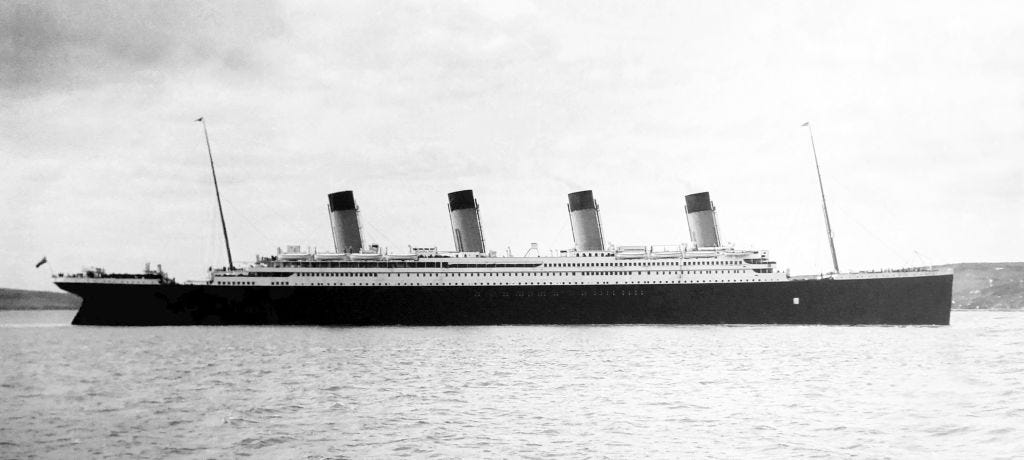
PEOPLE HAVE ALWAYS LOVED TO BRAG about predicting important historical events—decades later. The Cold War? It was so obvious. The Fall of the Berlin Wall—even obviouser! There were even people who claimed to have foreseen the sinking of the Titanic. And it’s amazing how many secret swamis knew the dot-com bubble was about to burst.
But did they change any of it? No. They blew the whistles and drank the champagne as people floated away to their doom. They hung on to their stock options until they were practically shirtless.
This common phenomenon, called hindsight bias, might seem slightly dumb or even sinister. I choose to see it as a kind of wistful magical thinking—a hopeful, oblivious hybrid of l’esprit d’escalier: I should have done something to prevent that disaster! Maybe next time I will.
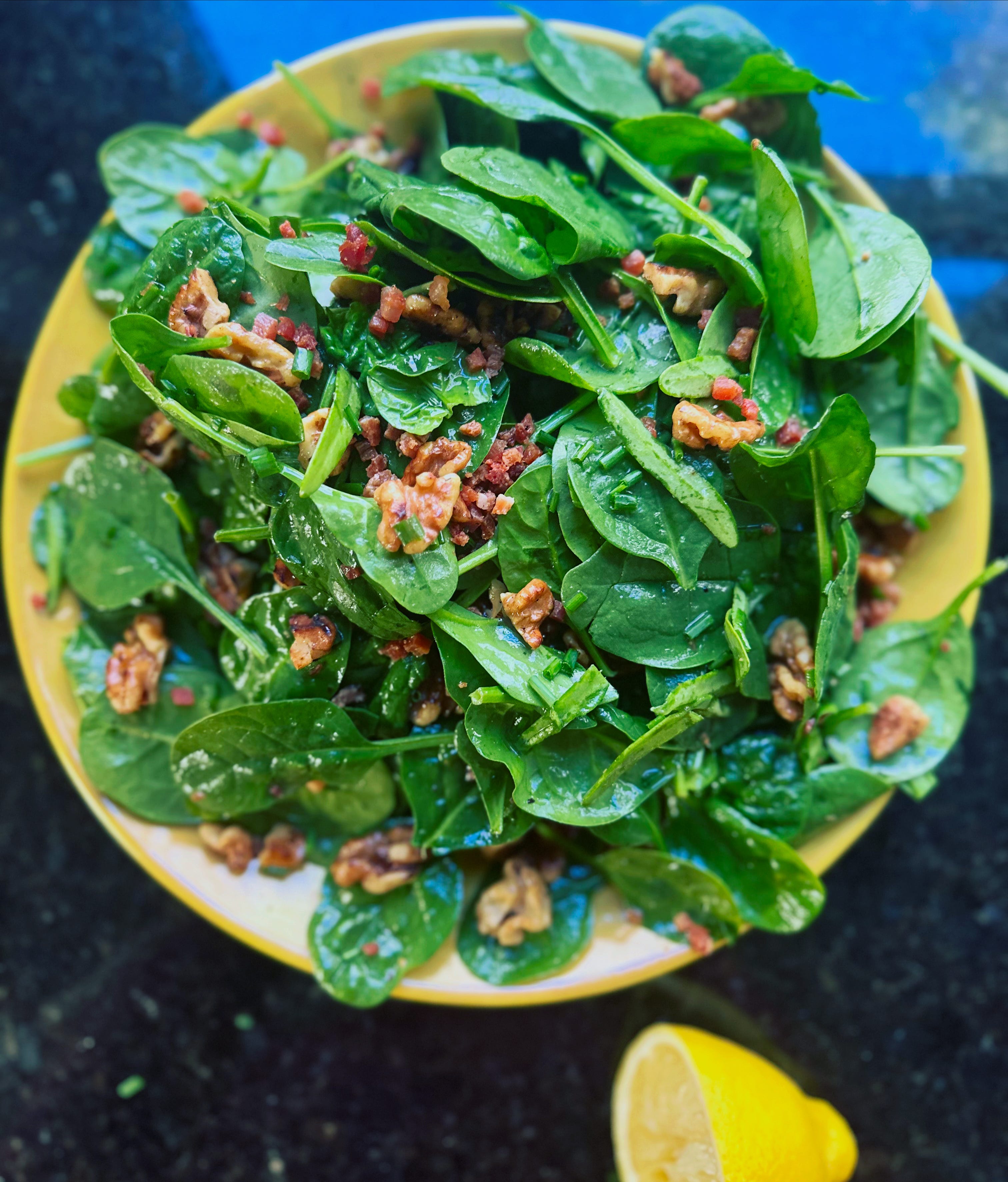
I have been guilty of this behavior myself, of course. I envisioned the American spinach salad calamity in the early 80s, when I was in college, and people ate at “fern bars.”
🥬 Please hit the ❤️ button at the bottom of this newsletter if you like it here! —The boys in the lab
I recall having my very first version of a salad that had been around for a while but by this point had become the iron-clad classic: the pretty green leaves, the chunks of bacon, the hard-cooked eggs, the hot, fatty cider dressing. Sometimes raw mushrooms. Delicious.
This is not sustainable, I whispered to myself. And then I watched, decade after decade, as the spinach salad became a bedazzled, cartoonish floozy. They added canned mandarin oranges and candied pecans and pushed it onstage. And sometimes blue cheese—or any kind of cheese, including that stuff from a bag. And the dressing got sweeter and sweeter as the years went by, until it tasted like liquid fudge.
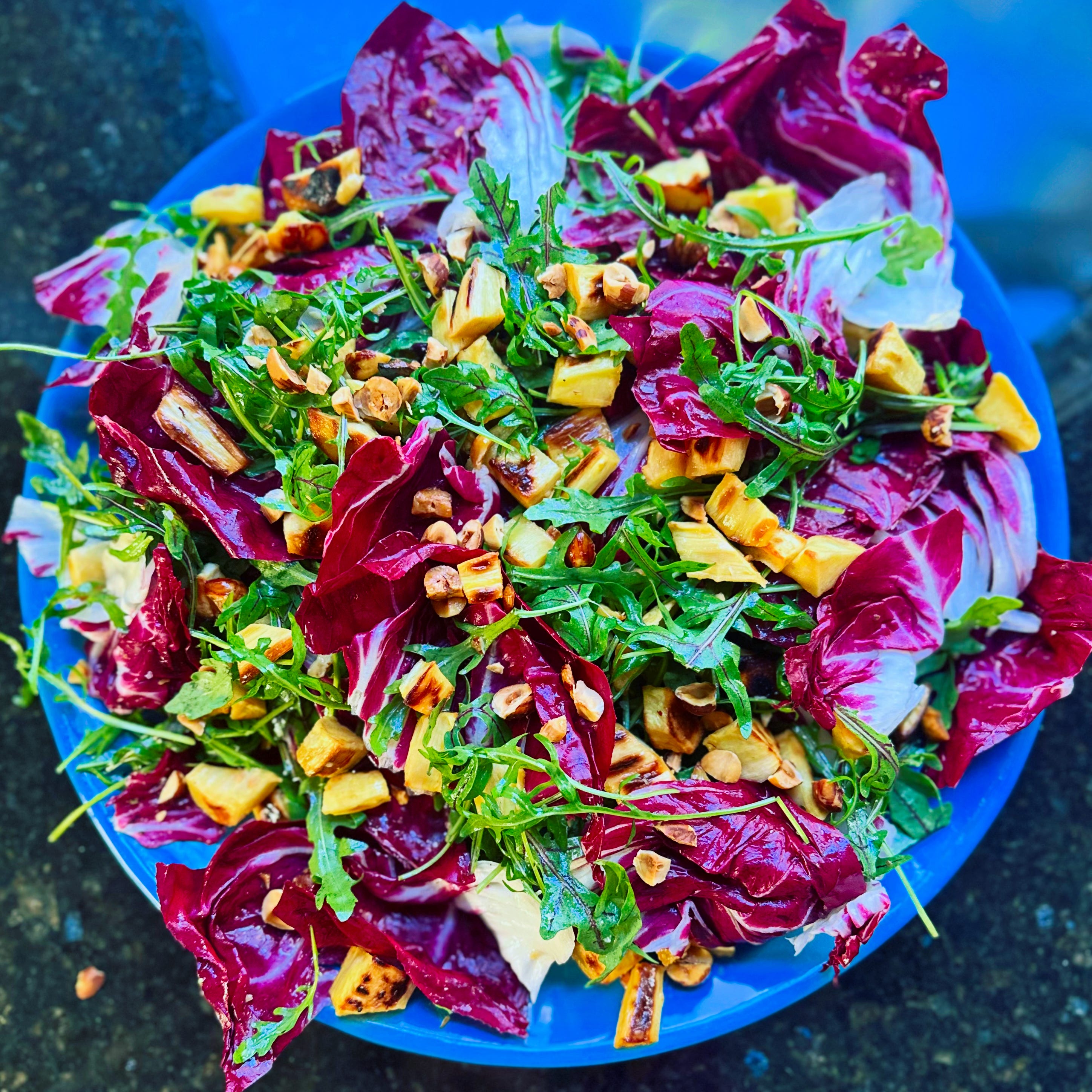
I’m well aware that we can’t predict or change history. But we can help clean up the debris from the tsunami. We can come to our senses about the risk-to-reward ratio of zeppelin travel.