
A Master Salad Maker Does It Again 🥗
Department of Salad favorite Hetty Lui McKinnon is back with a new cookbook, celebrating her flair for the form—and we have recipes.


THANK GOD FOR COOKBOOKS! What would the world do without cookbooks! How did it exist? I am glad I was not born before cookbooks.
For the second time since I started this newsletter five years ago, I’m paraphrasing, the 19th-century English cleric and “wit” Sydney Smith (and myself, since I’m stealing the quote from an earlier issue).
Smith, who was writing about tea rather than cookbooks, is the same “wit” (or “dork”) who wrote the famous poem about salad that certain types of people bring up if you tell them you write a salad newsletter.
Honestly, if I wrote the same poem and sent it to The New Yorker, I’m pretty sure they’d send me a form rejection letter with a quick hand-scrawled note at the bottom telling me not to quit my day job. But if you’re a dude from the 1800s mocking cookbooks and heroic poetry, your writing will live on through the centuries. Here it is:

Recipe for a Salad, by Sydney Smith
To make this condiment your poet begs
The pounded yellow of two hard boiled eggs;
Two boiled potatoes, passed through kitchen sieve,
Smoothness and softness to the salad give;
Let onion atoms lurk within the bowl,
And, half suspected, animate the whole;
Of mordant mustard add a single spoon,
Distrust the condiment that bites so soon;
But deem it not, thou man of herbs, a fault
To add a double quantity of salt;
Four times the spoon with oil from Lucca crown,
And twice with vinegar, procured from town;
And lastly, o’er the flavoured compound toss
A magic soupçon of anchovy sauce.
O green and glorious! O herbaceous treat!
’T would tempt the dying anchorite to eat;
Back to the world he ’d turn his fleeting soul,
And plunge his fingers in the salad-bowl;
Serenely full, the epicure would say,
“Fate cannot harm me,—I have dined to-day.”
But never mind. We’re a salad newsletter, not a literary monthly. And I’m talking about cookbooks today. Plus, in general, I try not to think about what a cookbook-less world would be like.
Luckily, we won’t face such a scenario in my lifetime. The planet is absolutely brimming with cookbooks, which—as a publishing category (along with children’s books, romance, and mystery/thrillers)—tend to be remarkably resilient when it comes to sales. (Early in the pandemic, when numbers in other genres were dropping, cookbooks grew by almost 9 percent.)
DID YOU KNOW? It takes two kinds of lettuce (🥬 + $$) to keep the Department of Salad going. The best way to support us, if you don’t already: Press the green button (and get full access to all the salad in our enormous archive).
And even if the publishing machine did grind to a halt, it’s reassuring to know that no one can ever take away our vintage cookbooks, which I consider priceless treasures. I wrote about this a bit in the early days of the Department of Salad. Here are a couple of clickable examples:
Something New To Do with Tomatoes!

Hello, salad-makers. Thanks for reading and thanks for subscribing. (If you’re not yet onboard and would like to gain access to all our delicious content, you can become a paid subscriber by using th…
Some of Our Favorite Salads Are from Old Friends

I’M FEELING EMOTIONAL ABOUT MY COOKBOOKS this week. My giant …
I’m sure I’m not alone in my belief that there could never, ever be such a thing as too many cookbooks in the universe—even on a planet like ours, which is saturated with food websites, TikToks, and Instagram reels as well as old-fashioned newspaper food sections and food magazines, all of them producing recipes (some of which go viral, or get prepared on the morning shows, or end up in books featured on the most prominent shelves at the actual book stores).
And it still doesn’t ever feel like enough. Give me more, more, more!
My personal sense has always been that we keep cranking out cookbooks for obvious reasons: Our society is a polyglot, diverse one consisting of people with wildly differing tastes and traditions, many levels of cooking experience, dissimilar budgets and food restrictions, and sundry culinary hopes and dreams and aspirations, not to mention unknowable but distinctly personal reasons for buying, reading, using, and collecting cookbooks.
Cookbooks, like human beings, are not one thing.
Which is why it always surprises me when food journalists complain that there are too many cookbooks being published!
But if you mainly follow the biggest outlets and names in food, you could easily end up believing that only about 40 new cookbooks come out each year, often by food celebrities and celebrity chefs (or just celebrities), the food journalists and editors themselves, or members of their circles. Even though probably more than a thousand others are published each year in the US and tens of thousands worldwide.
Which might explain why we all seem to hear about the same new cookbooks over and over and over when the roundups get published. This is just the way the world works.
This fact can leave some of us—especially the salad people—wondering where the glorious outliers are. I’m not here to tell you I have an answer, or that I have a thumb on the pulse of cookbook publishing and an inside track to the hidden jewels.
But I am here to say that in spite of everything we know to be true about this unpredictable, insane, heartbreaking, beautiful world, there are indeed cookbook authors that I absolutely love hearing about over and over and over. And that the vegetable-centric cookbook author Hetty Lui McKinnon is at the top of my list. I’ve written about her and how she got her start—in salad!—before (after her last cookbook, Tenderheart, came out). Click below if you’d like to read that issue of the newsletter; I’ve unlocked it for free subscribers this week.
Two Super Salads from a Vegetable-Recipe Star

IN THE DEPARTMENT OF SALAD, we believe that one of the best ways to separate the trustworthy p…
McKinnon is certainly neither obscure nor unknown—she’s winner of the 2024 James Beard Award for Vegetable-Based Cooking and the IACP Award for Best General Cookbook, not to mention a regular contributor to the excellent NYTimes food section, where her viral, much imitated Dumpling Tomato Salad with Chile Crisp Vinaigrette appeared. (That’s a gift link, by the way.) And she also has an excellent newsletter, To Vegetables with Love, that I obviously definitely recommend.
But she continues to feel like one of the aforementioned glorious outliers to me, despite how long she’s been in the mainstream, because her recipes so often reflect an original sensibility and her books are full of surprises. Which is why I am so thrilled to be able to give you two new recipes from her brand new book, Linger: Salads, Sweets and Stories to Savor, which hits bookshelves in the United States on October 7.
It was not easy to decide which two from the new book I wanted to give you—I was dazzled by such recipes as Ginger-Roasted Kabocha with Black Rice and Ginger-Miso Dressing; Shawarma Zucchini with Peas and Tofu Green Goddess; Soba with Roasted Brussels Sprouts, Mushrooms and Maple-Soy Sauce Caramel; Rice Paper Spring Roll Salad; and Whole Roasted Cauliflower with a Mountain of Dill. I mean, come on! (And it’s not just salads—you’ll also find Salsa Macha, Spiced Pumpkin Nian Gao (Mochi Cake), Master Cashew Cream, Vegan Meringue, and Cherry Tapioca Pudding—to name just a few alluring non-salady recipes.)
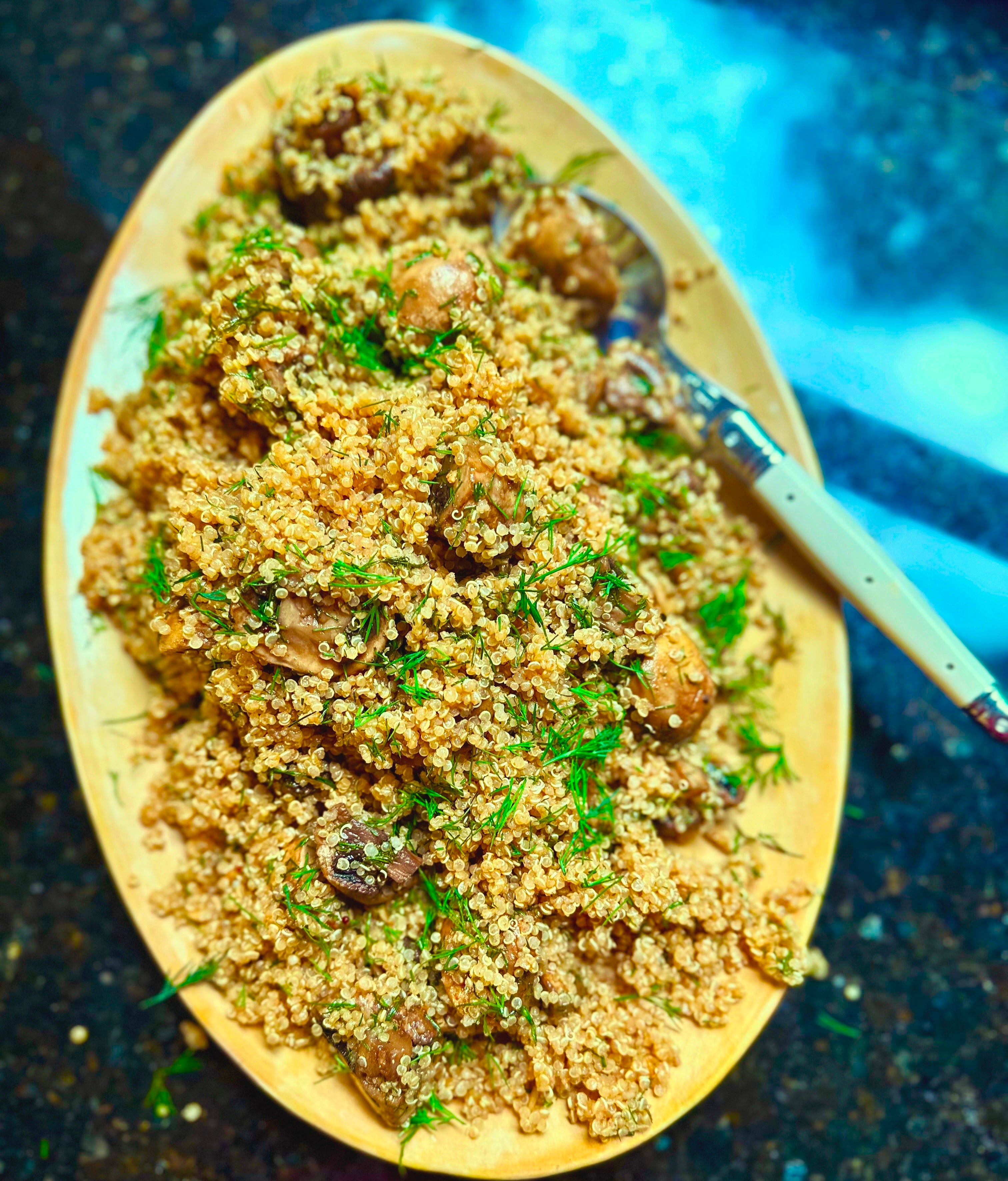
I finally settled on the two below because they use ingredients that I love, but in combinations I’d yet to try. I have very few notes for you. For the Pickled Mushrooms with Quinoa, make sure you don’t overcook the mushrooms; you’re just getting them ready for brining. Add the spicy brine to the final salad just a bit at a time, tasting as you go; it’s potent. And buy some decent feta for the Roasted Grapes and Feta with Grains and Kale; this recipe is worth it.
But before we get to those recipes, I asked McKinnon to respond to the Official Department of Salad Questionnaire. I hope you enjoy that—and I know you’re going to love these recipes. Cheers!
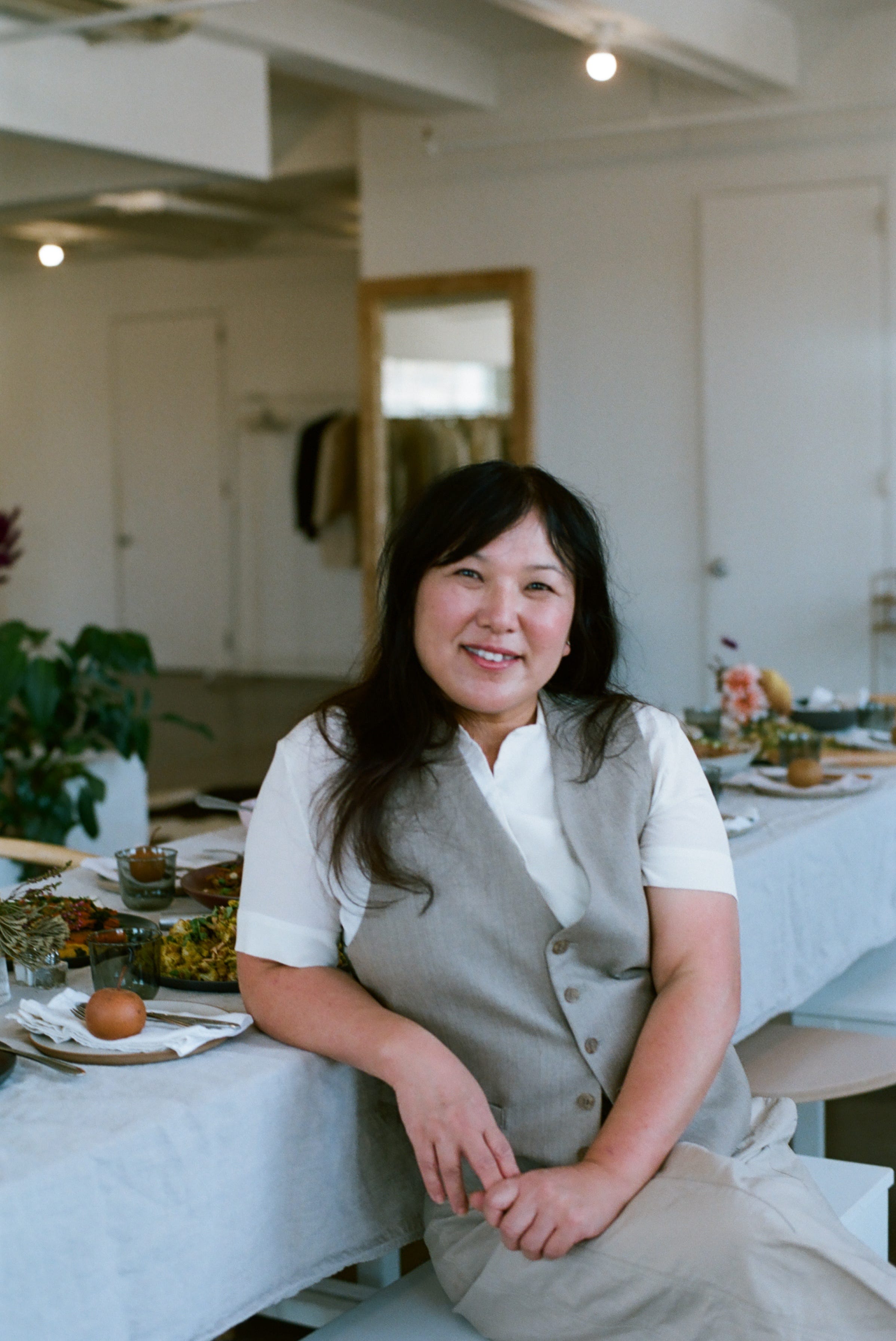
🥬 The Department of Salad Questionnaire: Hetty Lui McKinnon
1. Why salad the world’s most perfect dish?
A salad is a story. It is layered with many narrative arcs and plot twists. The story of a salad is told via the ingredients we choose to include. We can travel the world by using particular spices or condiments, tap into nostalgia in a dressing or sauce, and bring nuance with herbs, nuts or seeds.
Every ingredient is a character that has a crucial part to play in the salad story.
2. When you’re asked to “just bring a salad” (as if that’s the LEAST a person could do), what do you show up with?
I will usually bring my charred broccoli salad with chickpeas, capers and mint from my first book Community. I credit that salad as the dish that started it all for me (back when I had a salad delivery business in Sydney) and it never fails to impress. On the plate, it looks so simple, with very familiar ingredients, but people always lose their minds over it.
My other favorite is a noodle salad because who doesn’t love noodles? They are hearty and surprising. And they travel well. Lately, I have been sharing my vegan dan dan salad from Linger a lot and it’s always a crowd pleaser.
3. How do you feel about the (quite insulting, for some reason) term “word salad.”
There are many misconceptions about what a salad is and how to make a really delicious one. Our work is not done, Emily!
4. What makes a great salad?
For me, it’s all about BALANCE! Smooth textures juxtaposed with crisp or crunchy ones, rich ingredients with lighter ones, and salty and sweet notes brightened with acid. Always herbs - they add such excitement to the palate. Nuts and seeds make each bite more interesting. And of course, a perfectly harmonious dressing. The dressing or sauce is probably the most exciting part of a salad because it makes the entire dish sing.
5. What is the saddest salad anyone—restaurant or home cook— has ever tried to serve you?
I’ve just returned from Australia and on the plane, I was served a lot of sad salads. Little bowls of arugula or spinach with 1 cherry tomato, a watery dressing and no seasoning. I’m constantly blown away by how bad airplane salads are. And it makes me angry that the salad is still represented so poorly!
What’s even sadder is that I always eat the entire bowl of sad salad!! Because when I’m on a plane, I eat as much fresh food as I can, so even a sad salad is better than no salad!
6. Is there ever a time or place, aside from behind the wheel of a speeding car, when serving salad is NOT appropriate?
I honestly cannot think of a situation when a salad wouldn’t be appropriate. Even in a car, you could probably manage it - just slow down a little.
I have a list of where MORE salads would be appropriate - airports and travel hubs, sporting events, amusement parks etc. When I travel, all I want to eat is salad.
Perhaps dim sum is a place where I can’t imagine a salad haha. Chinese people don’t traditionally eat salads with raw ingredients because there is the thought that cold foods upset the body’s balance of yin and yang. But even at dim sum, I think there is room for salad!
7. What is your personal go-to salad and why?
I really love kale salad and in fact, I eat an iteration of a kale salad several times a week. I lightly massage kale with lemon juice and then this is my base to which I add different toppings such as roasted vegetables, some chickpeas or quinoa, avocado and pan fried tofu. I also add a liberal dusting of nutritional yeast which adds more protein and deliciousness. The dressing is usually tahini and chili crisp mixed together. It takes no time to make and it’s such a satisfying weeknight meal. 🥗
🍅 🥕 🥬 🌿
A small REQUEST
Please hit the ❤️ button at the bottom of this newsletter if you like it here! XO—Emily
*RECIPE: Pickled Mushrooms with Quinoa, from Linger: Salads, Sweets and Stories to Savor, by Hetty Lui McKinnon

Serves 2 to 4
HETTY LUI MCKINNON’S RECIPE NOTE: “Pickling is intentional. It requires forethought and preparation. It demands an investment in time, with results that speak to this effort. For this reason, pickled veggies are great things to have on hand when preparing a meal for many. Packed with all the essential flavors—tangy, sweet, salty, sour—they have the ability to quickly transform a dish. Often I will just toss kimchi through potatoes for a quick salad. In this vein, once these intense pickled mushrooms are in your fridge, this salad is ready in very little time. Mushrooms are 80 to 90 percent water, so I’ve roasted them first, to extract the liquid and concentrate their savoriness. I’ve chosen earthy dill to pair with the shrooms, but if it is not your thing, you could opt for another soft herb such as parsley, tarragon, cilantro or mint to use in both the salad and the pickles.”
NOTE: This recipe is vegan/gluten-free.
1 cup (7 ounces/200g) quinoa
2 cups (480ml) vegetable stock or water
Handful of chopped fresh dill
Extra-virgin olive oil
Sea salt and black pepper
Pickled Dill Mushrooms
1 pound (450g) button or cremini mushrooms
Extra-virgin olive oil
Sea salt and black pepper
¼ cup (60ml) red wine vinegar
2 garlic cloves, roughly chopped
Handful of chopped fresh dill
3 teaspoons smoked paprika
1 teaspoon cayenne or red chile powder
3 teaspoons brown sugar
Preheat the oven to 350°F (180°C).
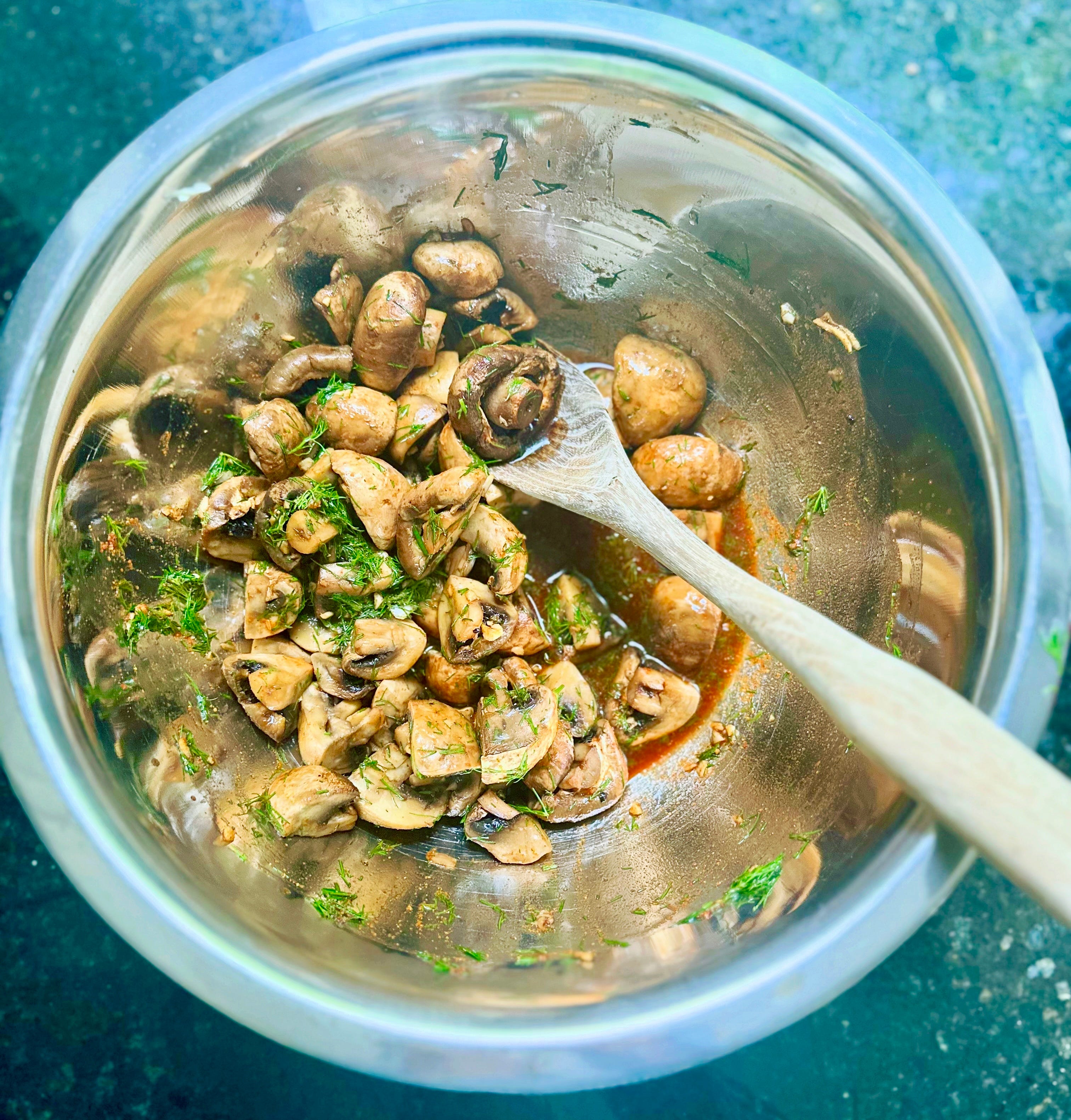
Make the pickled dill mushrooms: In a large baking dish, combine the mushrooms with 1 to 2 tablespoons olive oil, 1 teaspoon salt and a big pinch of black pepper. Toss to coat. Roast until the mushrooms are tender and juicy, about 15 minutes. Drain off the liquid and set aside.
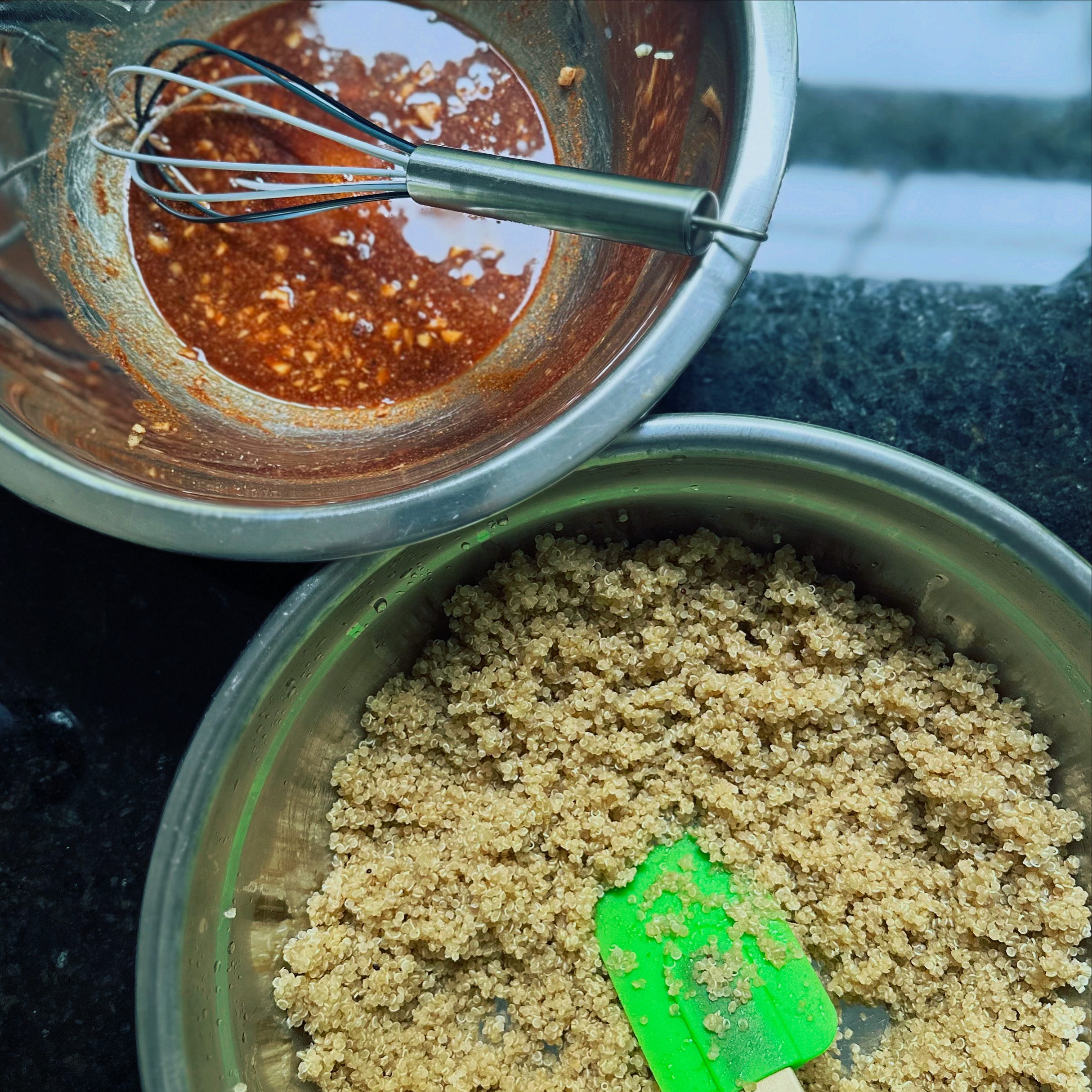
In a large bowl, combine the vinegar, garlic, dill, paprika, cayenne, brown sugar, 1 ½ teaspoons salt and a big pinch of black pepper. Add the warm mushrooms and toss to coat well. Place the mushrooms in the fridge and let marinate for about 2 hours (or longer).
Meanwhile, in a medium pot, combine the quinoa and vegetable stock (if using water, season with 1 teaspoon salt). Bring to a boil, reduce the heat to medium-low, cover and cook until the quinoa is translucent and tender and the liquid has been absorbed, about 15 minutes. Remove from the heat and let cool, covered, in the pan for 10 minutes. This allows the quinoa to dry out and puff up.
Transfer the quinoa to a large bowl and add the pickled mushrooms (the pickling juice is quite intense, so add as little or as much as you like) and three-quarters of the dill. Toss to combine. Drizzle with olive oil and season with salt and black pepper. To serve, top with the remaining dill.
Substitutions
Button or cremini mushrooms: any variety of mushrooms, such as fresh shiitake, oyster or king oyster
Quinoa: grain such as farro or pearl barley, couscous or chickpeas

*RECIPE: Roasted Grapes and Feta with Grains and Kale, from Linger: Salads, Sweets and Stories to Savor, by Hetty Lui McKinnon

Serves 4
HETTY LUI MCKINNON’S RECIPE NOTE: “This salad is inspired by a recipe I first developed for the Australian lifestyle site ABC Lifestyle, where grapes are roasted with a block of feta, to enjoy as a bite on bread. Here, I’ve taken this idea to the next level, tossing the bursting, juicy fruit and hot, creamy feta through grains and kale, allowing the cheese to coat everything, bringing a salty tang to each mouthful. Roasting grapes intensifies their flavor, eliciting a wine-like depth that is both sweeter and fruitier. This dish can be made with either regular feta (any variety works) or vegan feta, but note, non-dairy feta melts differently—rather than staying a relatively solid block like the dairy variety, vegan feta tends to puddle around the edges; simply scoop it all into the grains while still warm and toss to distribute, as it will solidify again as it cools.”
NOTE: This recipe can be made vegan by using vegan feta. For gluten-free: Substitute the farro or pearl barley with quinoa or brown rice.
1 pound (450g) seedless grapes (any color)
1 small red onion, cut into thin wedges
3 to 4 sprigs fresh thyme, leaves picked
2 to 3 tablespoons balsamic vinegar
Extra-virgin olive oil
7-ounce (200g) block vegan or dairy feta
Sea salt and black pepper
1 cup (200g) grains, such as farro or pearl barley
1 bunch (9 ounces/250g) lacinato kale, leaves separated and roughly chopped
Juice of ½ lemon
1 cup (4 ounces/110g) roughly chopped toasted walnuts
1 cup (30g) roughly chopped or torn fresh parsley or mint leaves (or a combination of both)
Preheat the oven to 425°F (220°C).
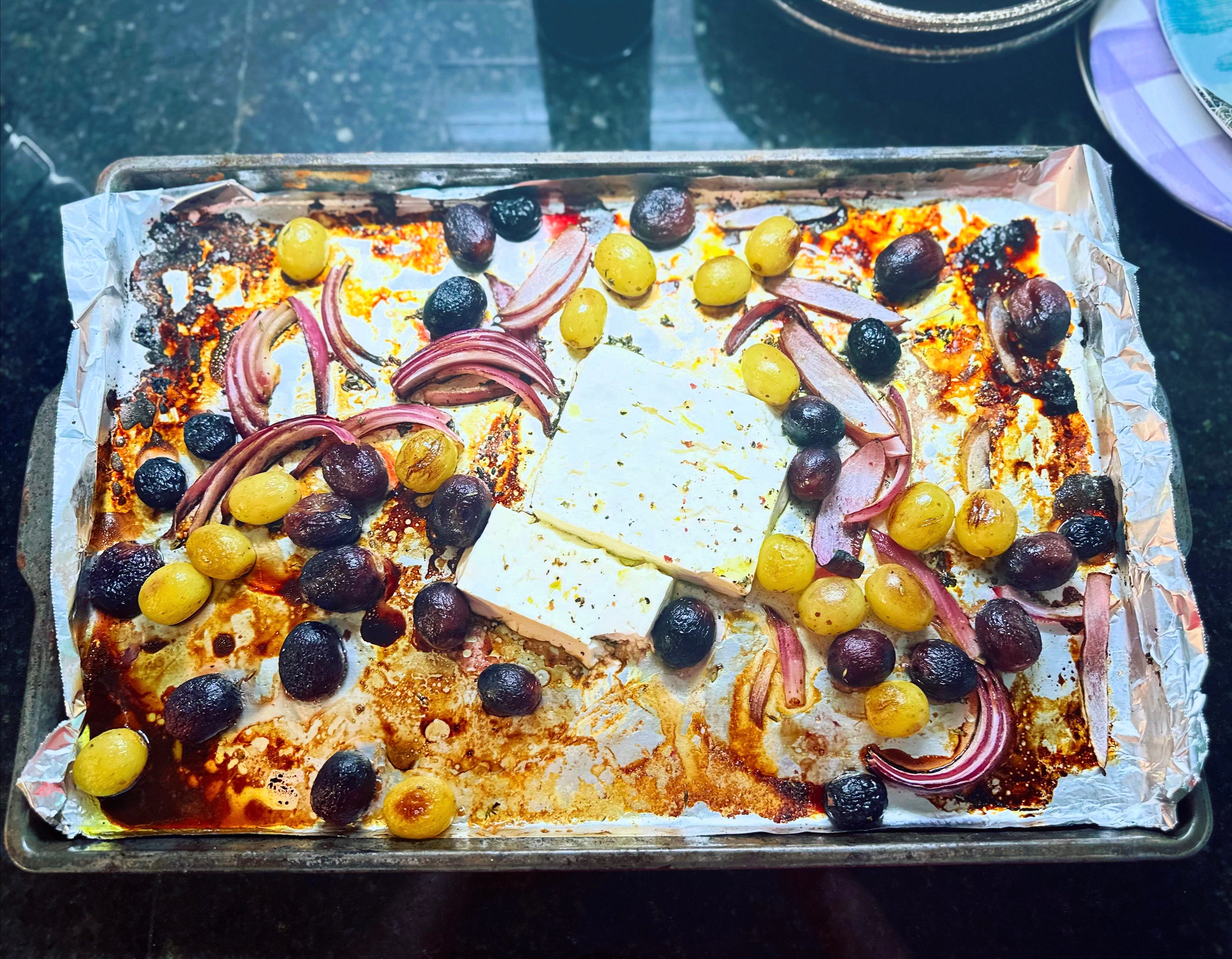
Place the grapes and red onion on a baking sheet, scatter the thyme leaves on top and drizzle with 1 tablespoon of the vinegar and 1 tablespoon olive oil. Toss briefly to coat.
Roast until the grapes begin to collapse, 10 to 12 minutes. Remove the tray from the oven and add the feta. Drizzle with some olive oil and season with pepper. Return the pan to the oven and bake until the onion is tender, the feta is soft and the grapes begin to burst, about 10 minutes.
Meanwhile, bring a large pot of salted water to a boil. Add the grains and cook until tender according to the package directions. Drain, rinse under cold water and drain again. Let cool.
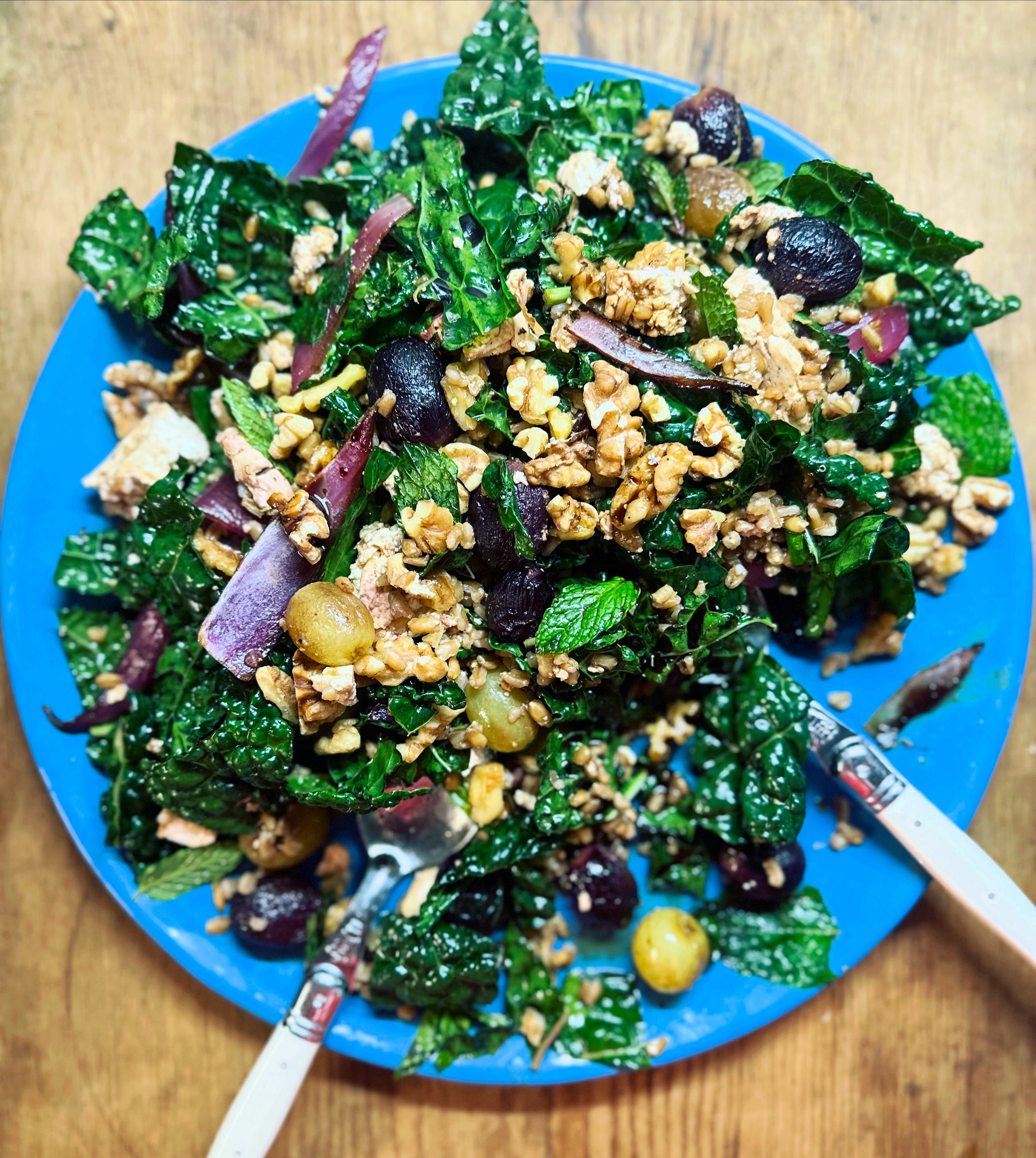
Place the kale leaves into a large serving bowl. Drizzle with 1 tablespoon oil and the lemon juice and season with ½ teaspoon salt. Using your hands, massage the mixture until the leaves soften.
Add the cooled grains to the kale, along with the warm grapes, onion and feta, half of the walnuts and the herbs (try to do this while the feta is still warm so it melts and coats some of the grains). Add another tablespoon of the vinegar, drizzle generously with 2 to 3 tablespoons olive oil and toss to combine. Season with salt and lots of black pepper. Taste and make sure you are happy with the seasoning, adding more salt or vinegar if needed. Top with the remaining walnuts and serve.
Substitutions
Grapes: pitted cherries
Farro or pearl barley: quinoa, brown rice or black lentils
Kale: baby spinach, arugula or salad leaves
🥬🥬That’s It! We’re done here! We’ll see you soon with a recipe for authentic Brazilian Pirarucu de Casaca. I’m kidding—it’s going to be salad.
🥬 IN THE MEANTIME: Please hit the ❤️ button below, share your comments, or share the newsletter. Your presence and engagement helps keep the lights on at the Department of Salad. It means the world to us.
Thanks Emily!! So happy you enjoyed these salads and ever grateful for your kindness.
Oh my gods these both sound divine.